The story that follows is based on an interview with Randy Flynn, To make it easier to read, the exchanges have been reorganized and shaped into a continuous narrative, while remaining faithful to the ideas expressed.
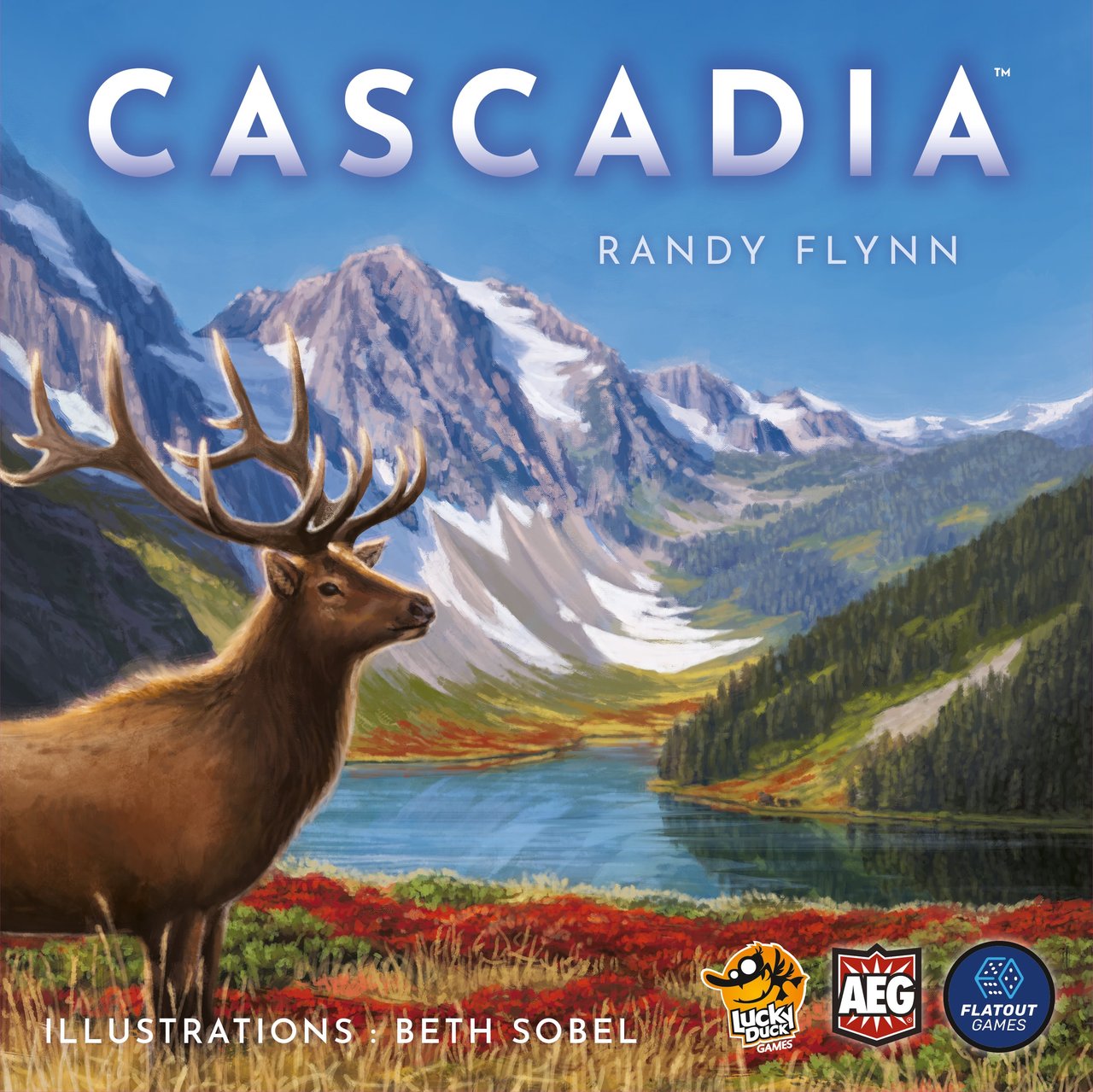
How did a return flight from Hawaii give birth to Cascadia, Spiel des Jahres 2022? An interview with Randy Flynn, its designer, who shares the story behind the game.

The Return Flight
This story begins after my vacation in Hawaii. During our stay, we had the chance to play a game of Orbis and several of Tiny Towns and we really enjoyed them.
On the flight back, as I settled into my seat, I was rereading my game design notes when I came across one that simply said: “double-layer tile-laying game, where the first layer dictates what can be placed on the second.” I had also jotted down a few possible themes. It was simple, almost obvious — and that’s exactly what I liked about it.
In the end, everything clicked: my notes, the hexagonal tiles from Orbis, and the variable scoring cards from Tiny Towns. I opened my notebook again and, throughout the entire flight, I wrote, thought, and created non-stop. A week later, the prototype was playable.
Joining Flatout CoLab
It all started solo — well, not entirely, as I can’t thank my family in Seattle enough, the best playtesters anyone could ask for. Very quickly, I expanded the circle by playtesting with our local design group and at public events to gather more feedback and refine my ideas. But it was after signing with Flatout Games that the Flatout CoLab formed around what would become Cascadia.
Flatout Games is a U.S.-based board game studio founded by Shawn Stankewich, Molly Johnson, and Robert Melvin. They developed the CoLab model: a small team working together on design, development, publishing, and logistics, with no strict publisher/designer hierarchy.
For Cascadia, there were six of us: the three founders — Shawn Stankewich, Molly Johnson, and Robert Melvin — handling development, publishing, and logistics; David Iezzi and Kevin Russ on development; Beth Sobel and Dylan Mangini on illustrations; and myself on design & development.
Why did I choose to work with Flatout Games? Our local game design community was already close to them, and Shawn was one of the first people I met there. He and Molly were able to see and test Cascadia very early on, and they approached me about making it their second game. Everything happened very naturally, just a few months after the original idea.
All team members were people I already knew in the board game community, and everyone played a part in bringing Cascadia to life.
It’s worth noting that the first question I asked Flatout Games was: “Beth is doing the art, right?” referring to Beth Sobel, Calico’s illustrator. Their immediate answer — a resounding “Yes!” — was exactly what I was hoping for. Why? Because Beth lives north of Seattle, and how could anyone imagine a Pacific Northwest–themed game illustrated by anyone else?
With the team in place and the dream illustrator on board, all that was left was to turn this cardboard prototype into a real game.
From Cardboard Cutouts to the Final Game
Did you know the game was originally called “Lands & Creatures”? I came up with that name the day before my first playtest because I simply had to call it something. In the end, it remained one of the final contenders alongside Cascadia during some lively team debates.
My first prototype included a board, similar to Calico, printed on cardstock. The tiles were pre-cut hexagonal cardboard tokens I had on hand, covered with sticker paper. As for the artwork, I created everything digitally and printed it using my small home printer.
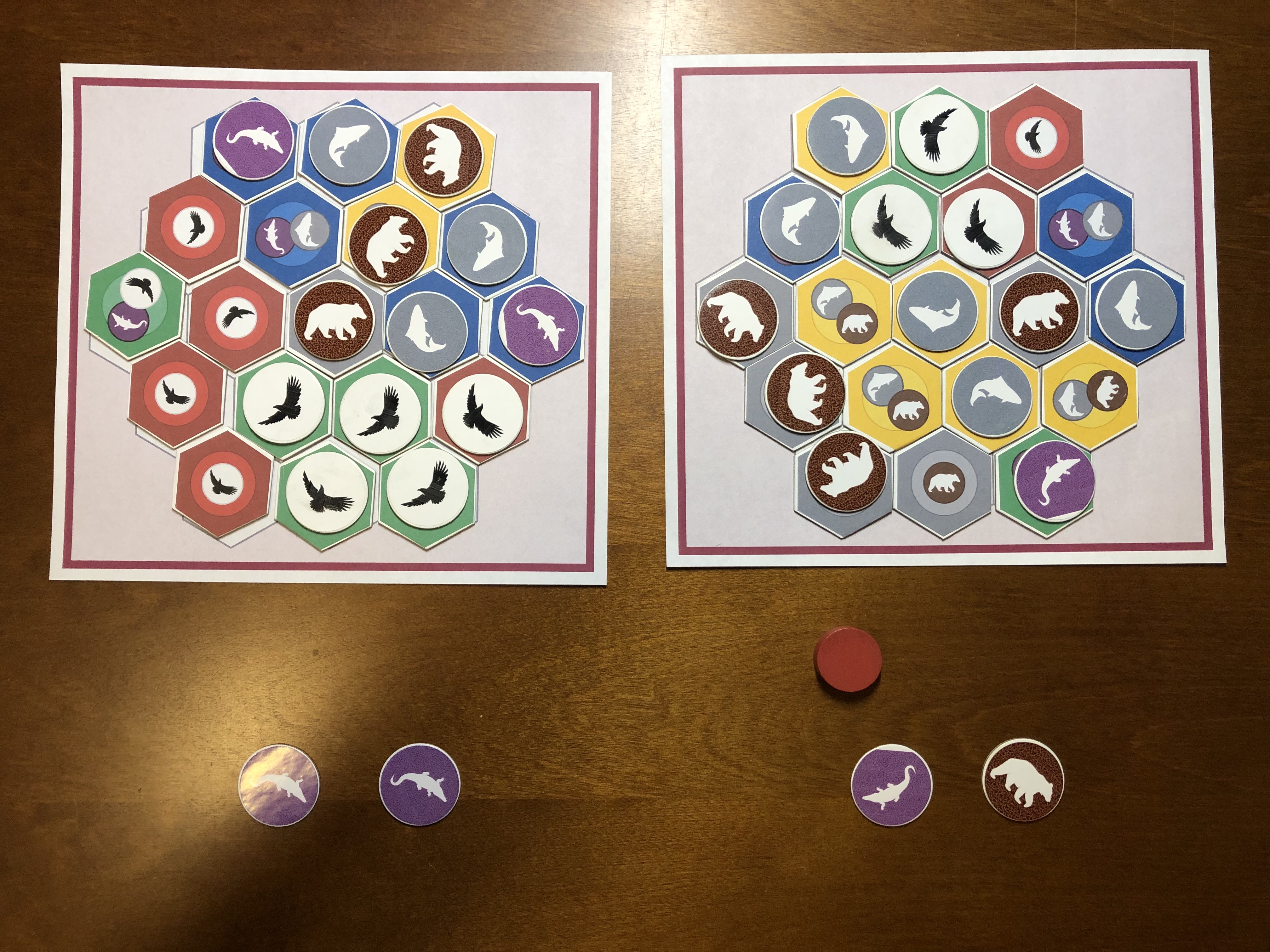
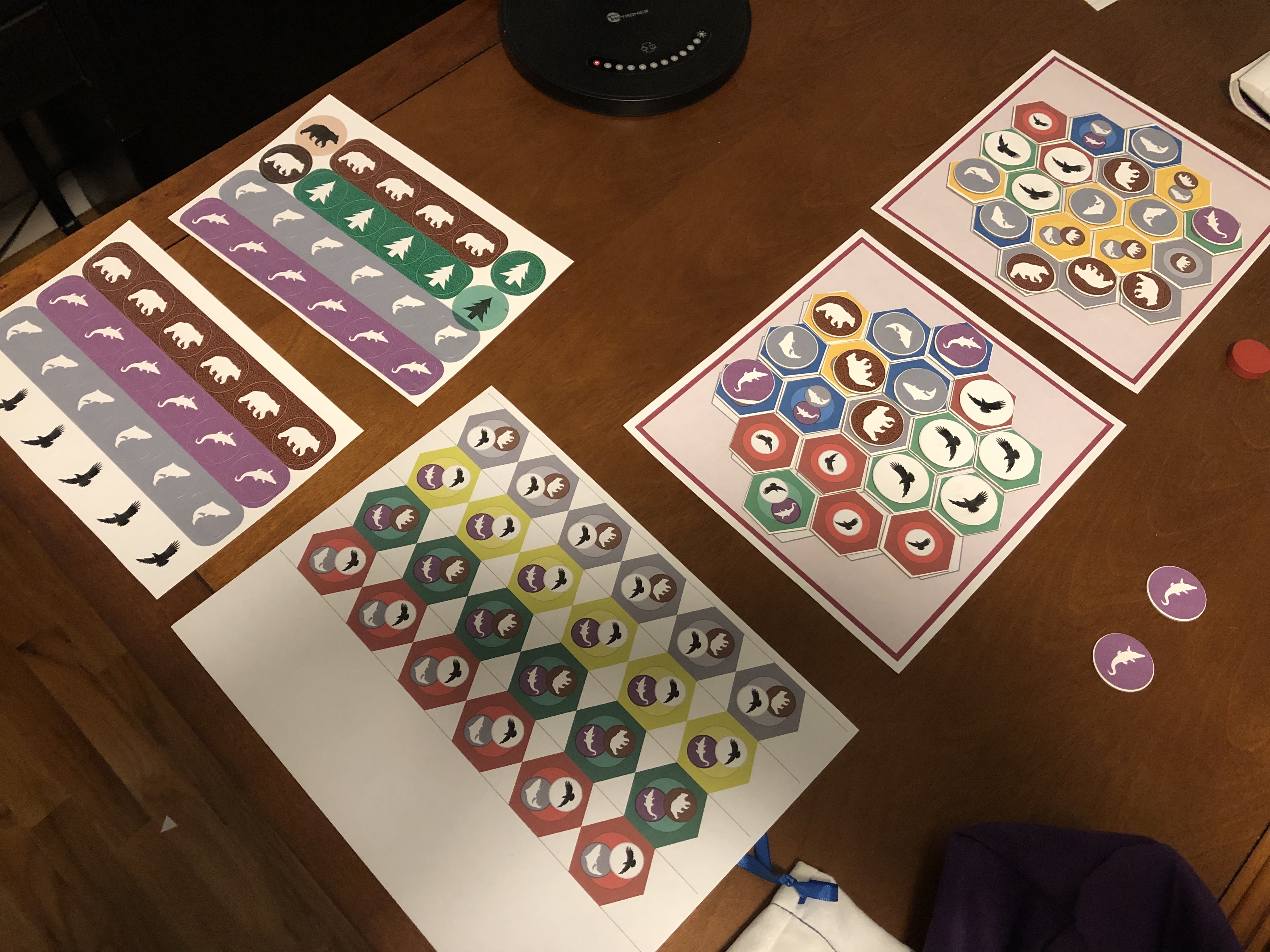
One version, then two… then twenty — and honestly, probably many more. I iterated extensively during the design phase, and even more during development. I also played hundreds of games, and we were still testing it during its presentation at PAX Unplugged 2019, one of the largest board game conventions in the U.S., held annually in Philadelphia. In fact, it was still being tested when the Kickstarter campaign launched the following fall.
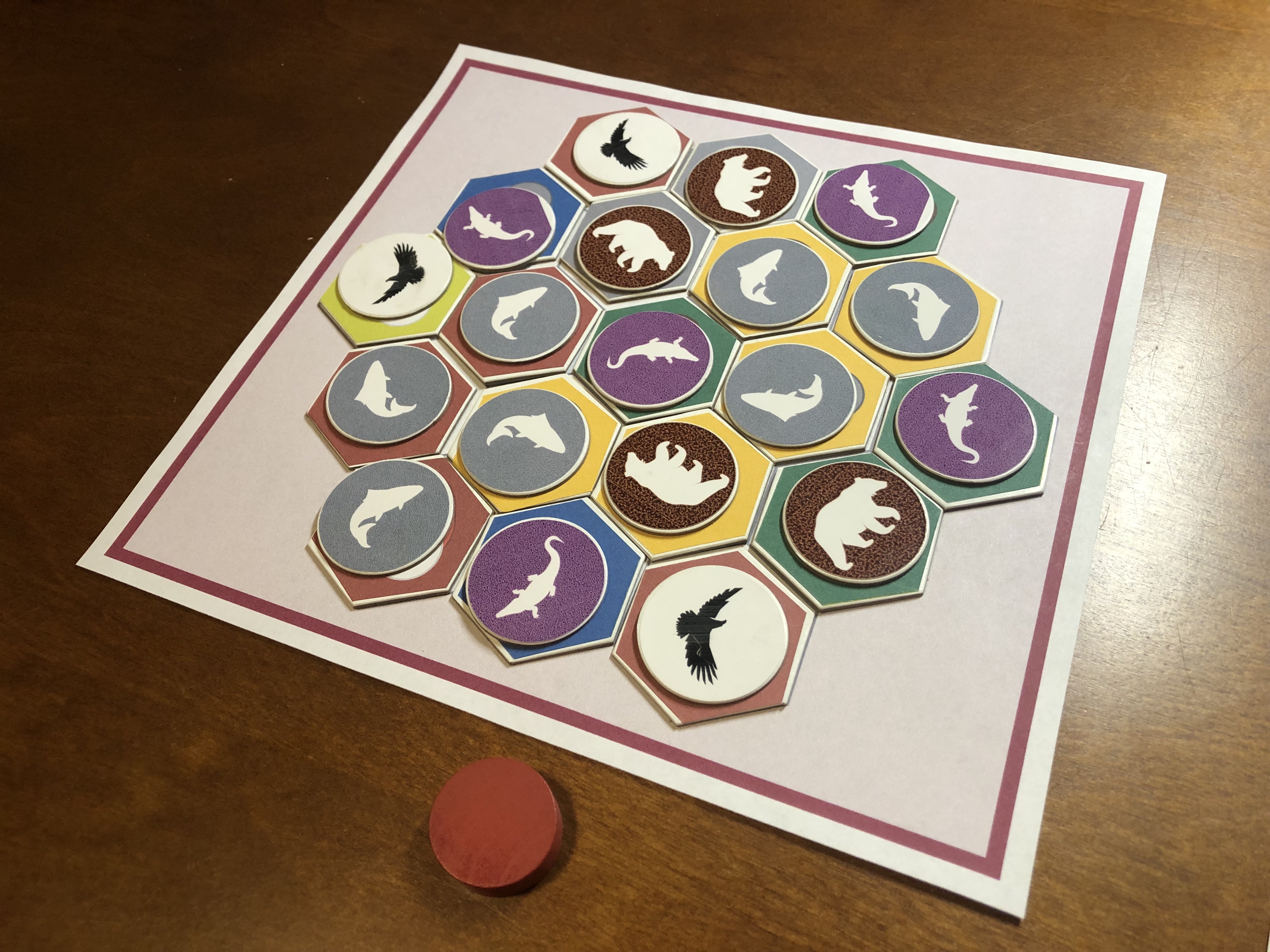
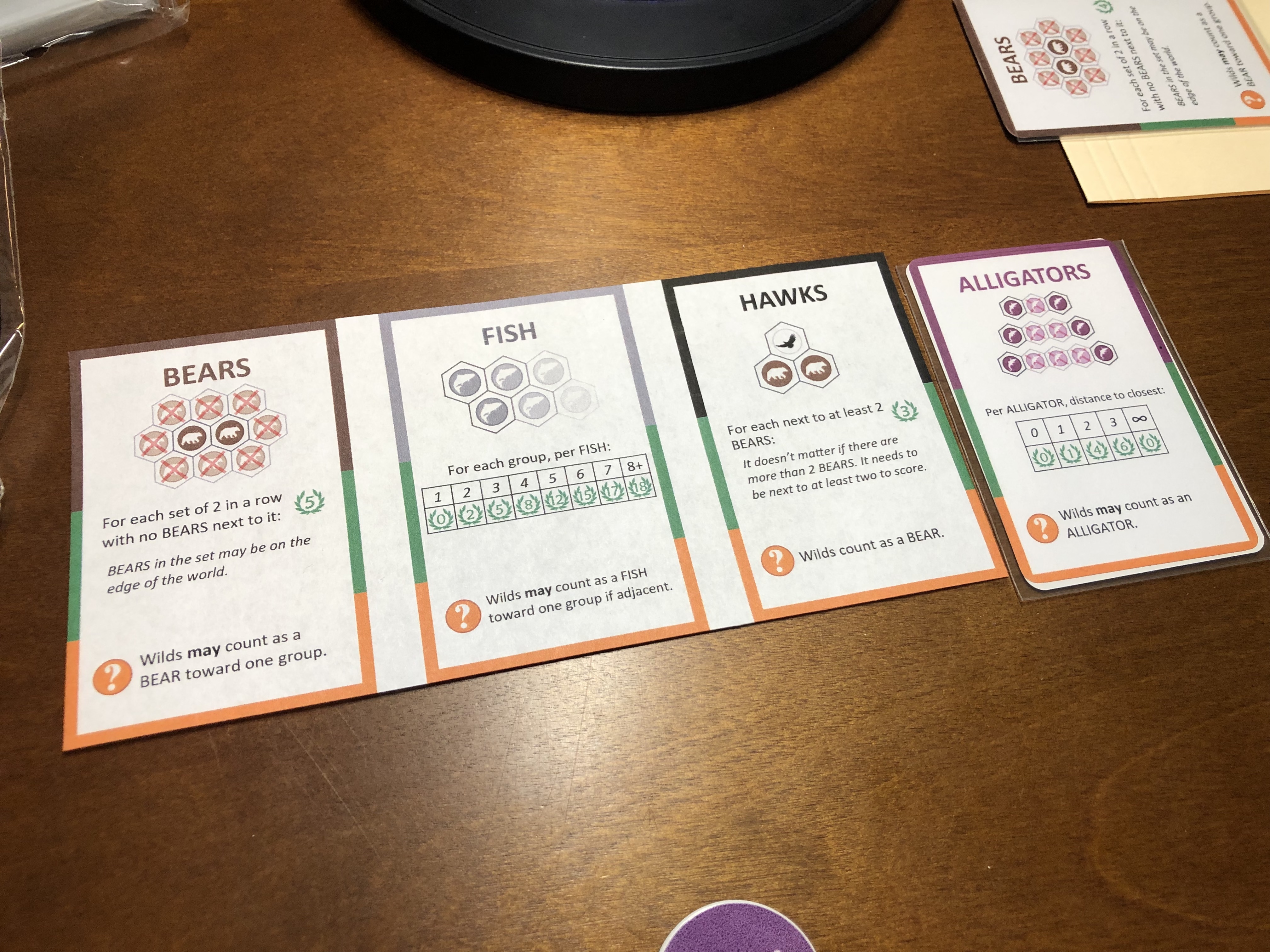
One of the biggest changes was removing the board. During the first development session, it was the very first thing we did — and the improvement was immediate.
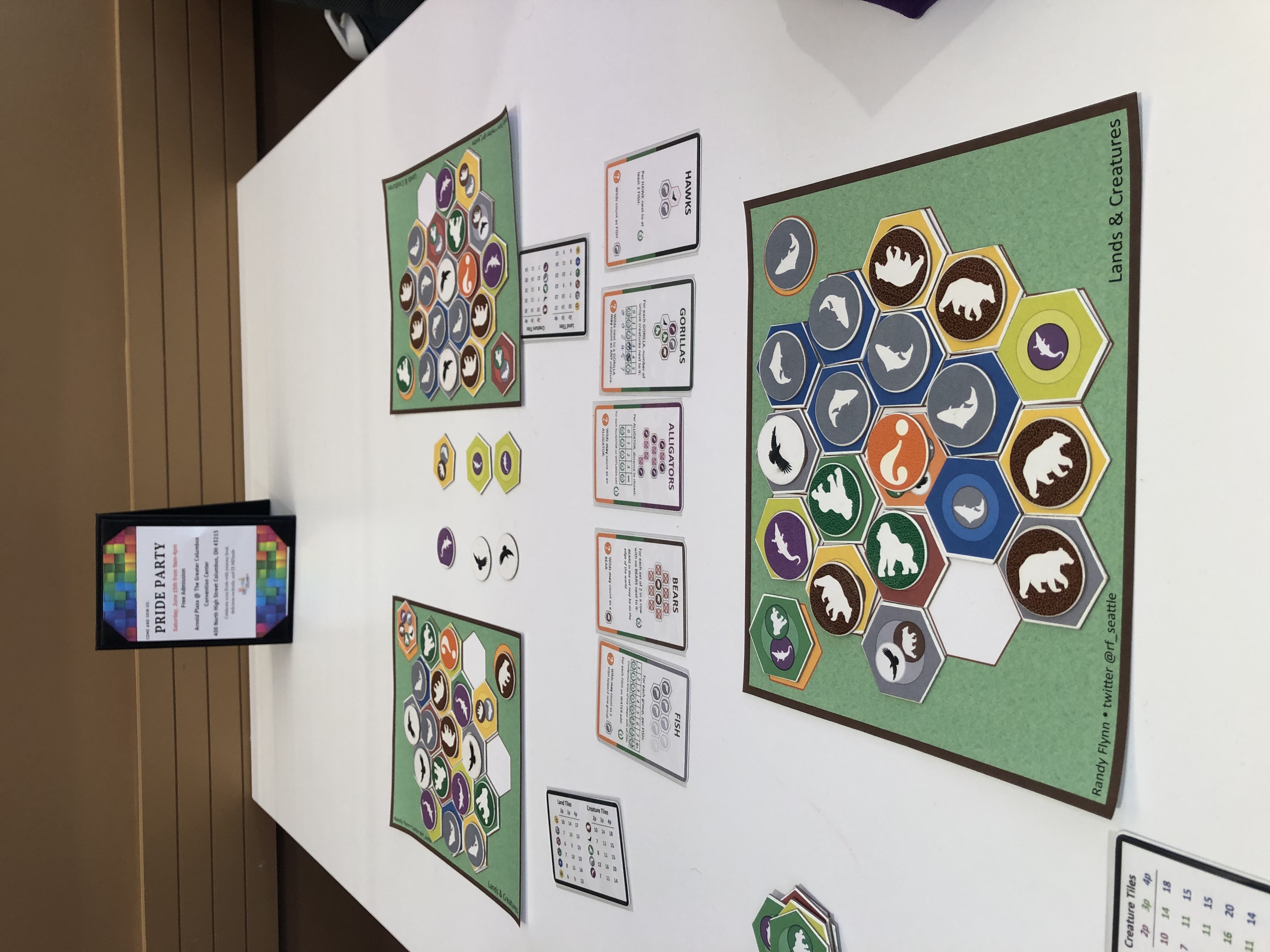
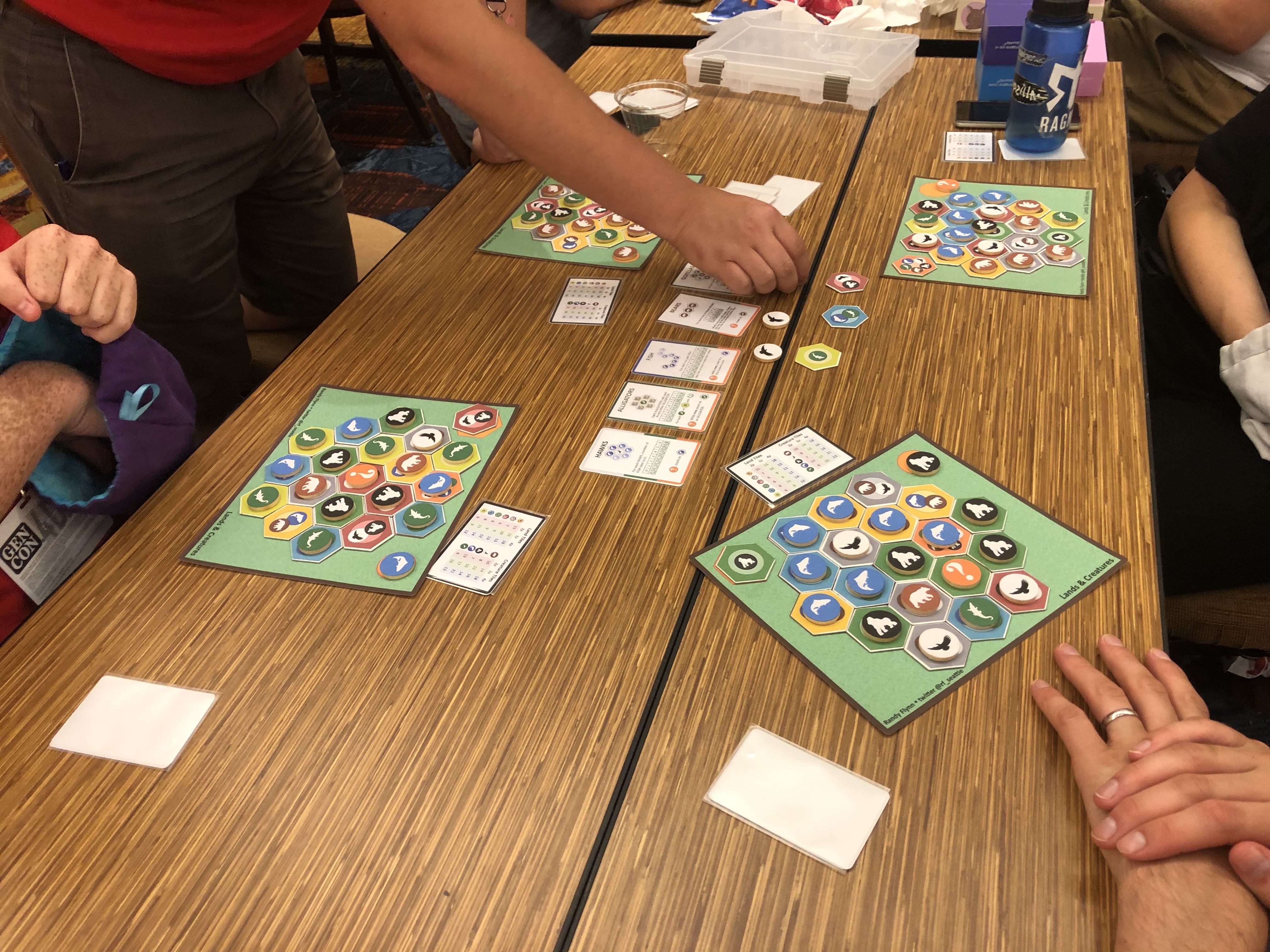
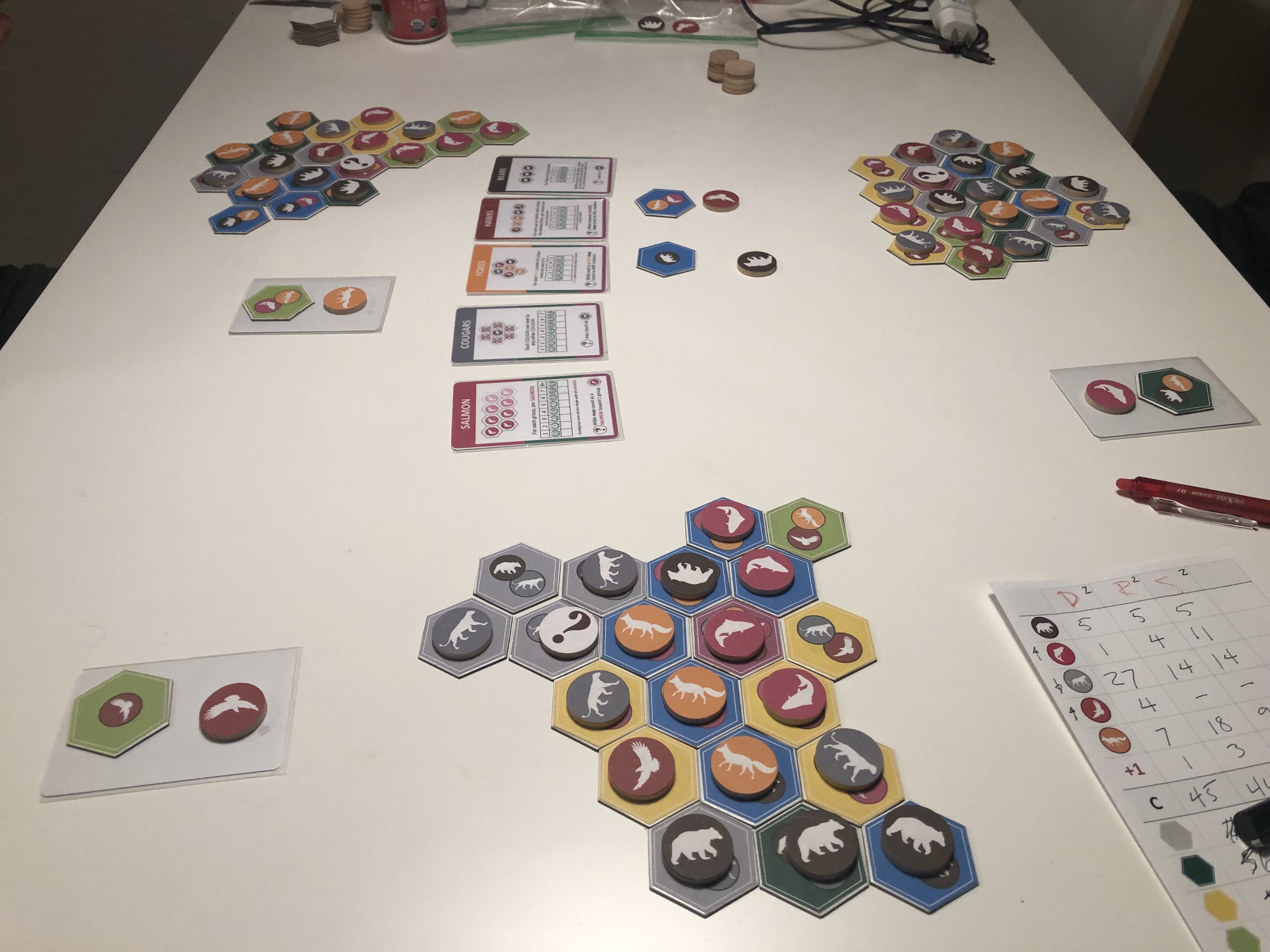
A game doesn’t evolve in a vacuum—it grows through player feedback. One player once described the game as “incredibly chill.” While meant as a compliment, it signaled a lack of tension. This led to pairing tile and animal selection, forcing more meaningful decisions.
In my opinion, paired drafting, removing the board, and having tiles with split habitats were the key changes that helped us reach our goal: forcing players to adapt their strategy based on a randomized market.
Of course, you always wish for perfect components and setup, but time and budget require compromises to make the game accessible.
But having a finished game was only one step. The next challenge was convincing backers.
Kickstarter During a Pandemic
The first day of the Kickstarter campaign was one of the most stressful moments. The pandemic made everything more uncertain, but the first days were a great success.
A Game That Bridges Generations
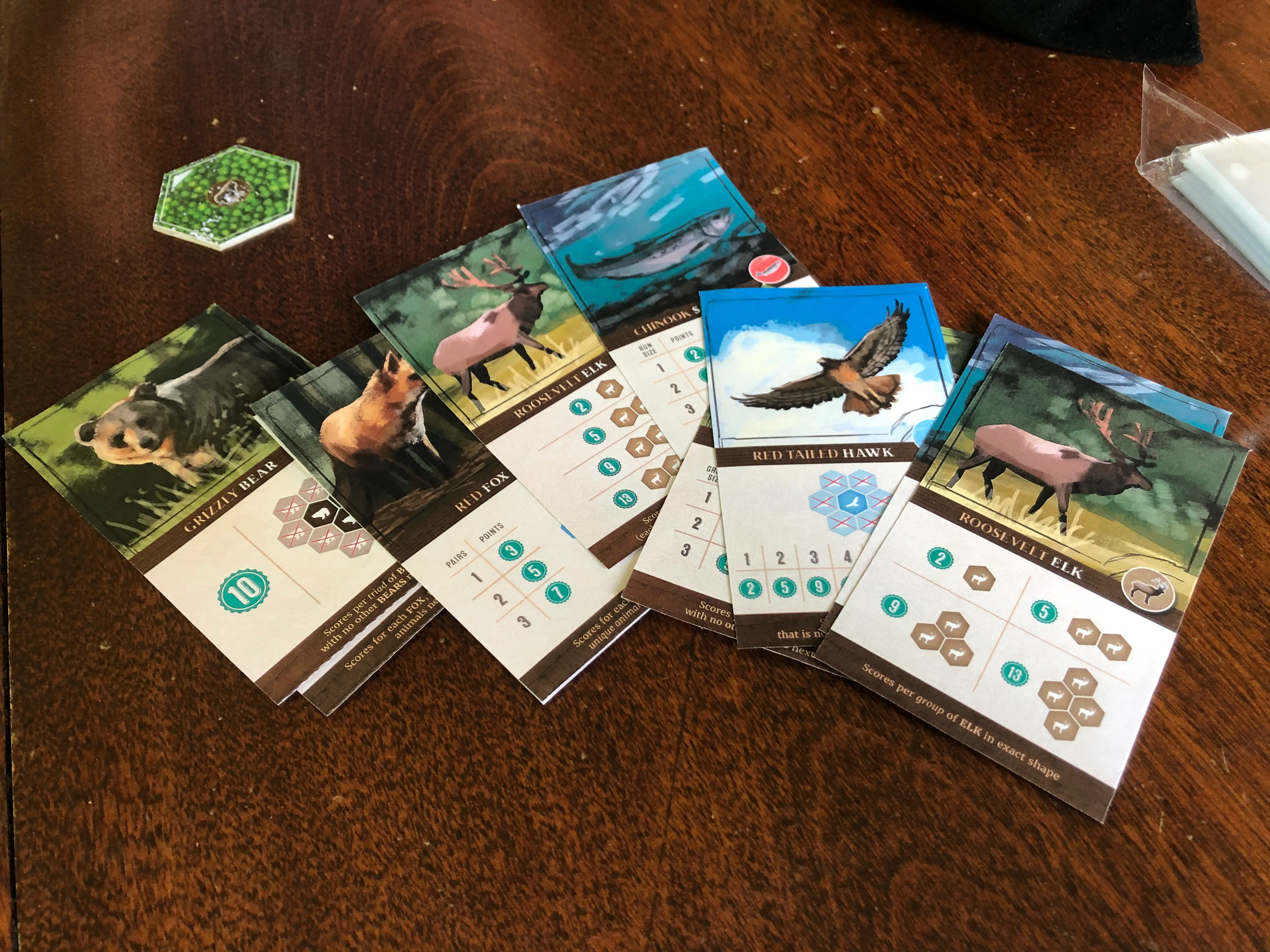
If I had to go back, I wouldn’t change much—maybe just one animal scoring card.
One of my strongest memories was my first SPIEL in 2023. Seeing entire rows of tables filled with people playing Cascadia was unforgettable.
One of the most meaningful compliments I’ve received is hearing a self-proclaimed “hardcore gamer” say that Cascadia is the game they can share with their parents, grandparents, and children alike. Designing a game that bridges generations is incredibly rewarding.
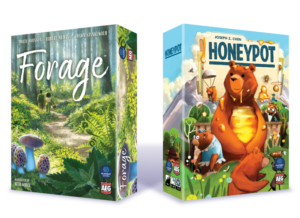
Today, I’m working on several projects with the Flatout CoLab, including development work on the CoLab for Honeypot (designed by Joseph Z Chen) and Forage (designed by the 3 Flatout Games founders).
📸 Tu veux ne rater aucune autre histoire ?
Suis Ludolore sur Instagram📸 Don't want to miss another story?
Follow Ludolore on Instagram