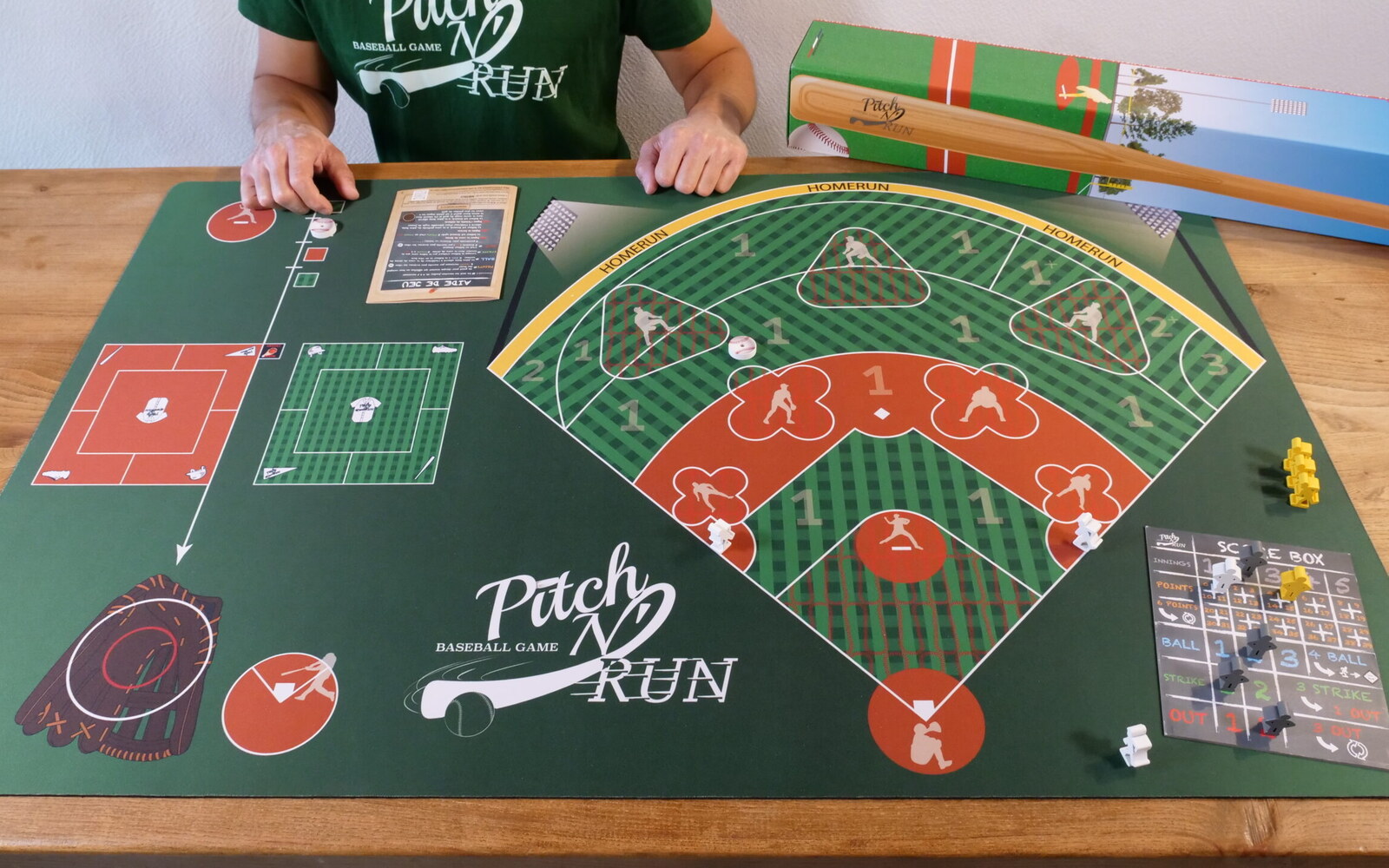
A cult movie glimpsed as a kid, a club in La Rochelle, a lockdown, and a game of Clank: that’s how Pitch N’ Run was born — a flicking game that brings a real baseball game to life right on your table. The story of one designer’s journey, from the very first sketch to the crowdfunding campaign.


Warm-Up — How a Passion Was Born
The way I remember it, we have to go back to the ’80s. I’m at my parents’ friends’ place and, on Canal+, I catch the final scene of the movie The Natural, with Robert Redford. That scene burns itself into my mind for good and sparks a genuine passion for baseball. It’s a spectacular game — but one that happens to be tough to follow for the uninitiated.
In ’94, my mind is made up: I ask my mom if I can play, and I figure the stars are aligning — turns out there’s a club right there in La Rochelle. That club is the Oceans Cubs, now renamed the Boucaniers de La Rochelle.
And just like that, a passion was born!
Much later, in 2020, like everyone else, we’re in lockdown. A buddy — a former coworker I used to game with on lunch breaks — kept talking to me about Clank! But we could never manage to set a night for it. It finally happened during the second lockdown, in November 2020: I got to play a round at his place at last. Instant love — by Christmas, the game was under the tree.
Ever since, we’ve kept at it: with my sons first, and my 8-year-old daughter has joined in too. Getting to know the owner of a game shop near my place also got me to try a ton of titles. I think I’ve always loved board games — but that was the real spark that got me hooked on modern board games.
First Pitch — The Spark (2023)
Fast-forward to August 2023. I’m coming home from vacation in Sardinia and, as often happens, the end of a trip brings its share of new ideas and projects. That day, my slightly crazy idea comes down to a single question:
“Couldn’t a board game be the perfect way to introduce baseball in a different, simpler way?”
🎯 Goal #1: recapture the feelings and emotions of a real game, while stripping away the complexity of the sport’s rules.
How? A flicking game: the idea came to me pretty fast and just felt right. And that made it simple, fun, and accessible to everyone.
So there I am with the idea and the drive… except I’d never made a board game! No matter: I wanted to see the whole thing through — design the game, test it and have others test it, but also manufacture it, handle the marketing, and of course sell it. Well, I had my work cut out for me 🙂
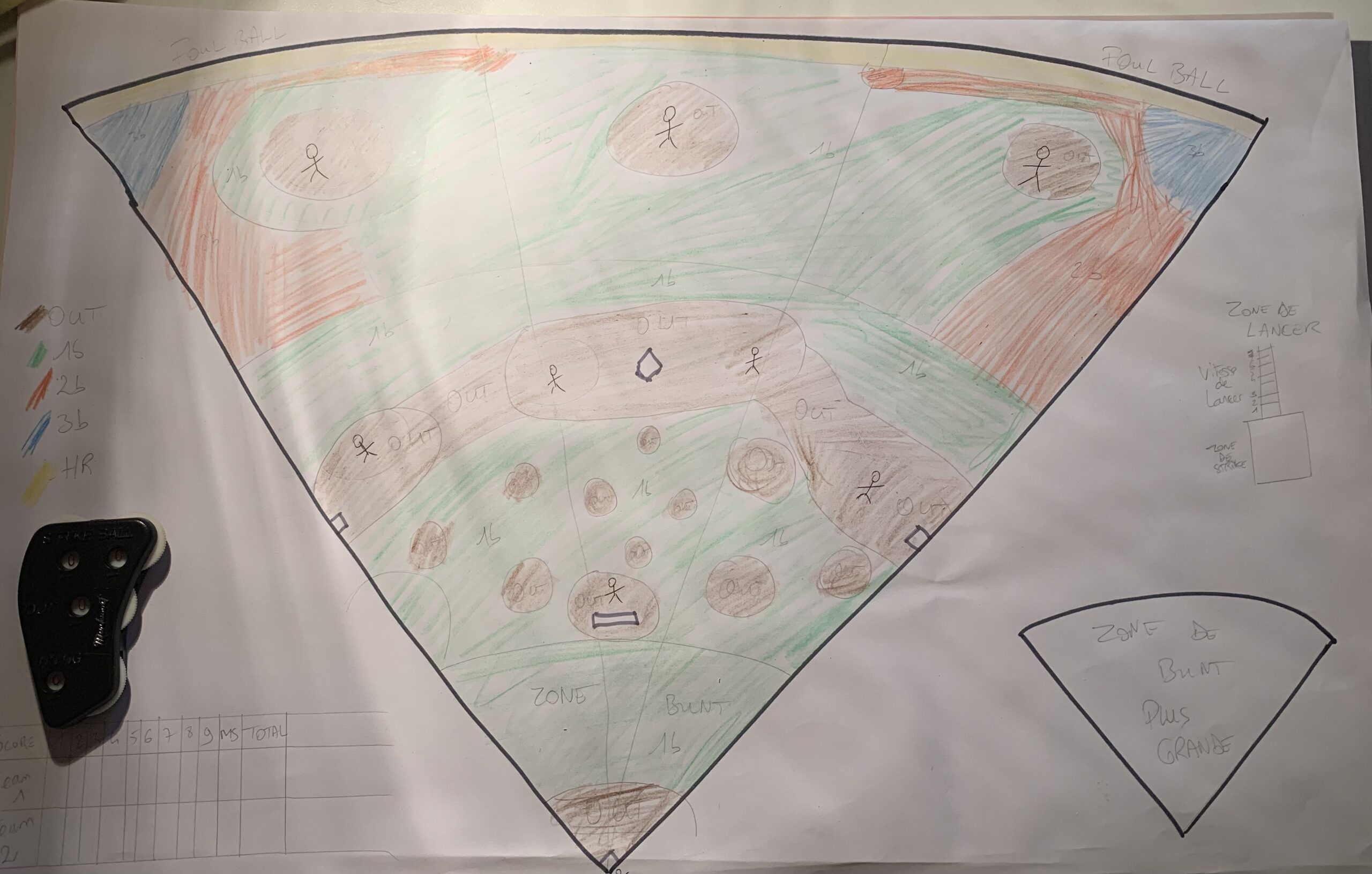
I grab a sheet of paper and a pencil, and my hand starts sketching my new playing field.
The Lineup — A Team and Family Affair
Pitch N’ Run is a project I first carried on my own. But pretty quickly the playtesters, the baseball players, my family, and several other people joined the journey — each bringing feedback, ideas for mechanics and rules, and advice on communication.
And this is where life does its thing: it’s made of encounters. One evening, I’m having dinner at my neighbor’s and I meet his brother Clément, who happens to be a huge sports fan. A meeting that would change Pitch N’ Run forever, because Clément Isel would become the game’s designer. We clicked immediately, and once the project started taking shape it was obvious: I wanted to work with him. We got along great, we live in the same town, which made our back-and-forth and our work sessions so much easier. That closeness made everything more direct and more fluid — which, I think, let him bring the game to life, carrying my ideas, my mechanics, and my vision into a coherent, appealing visual world. If you see how players react to the components today, there’s no way to overstate his contribution. I don’t even want to imagine how I could have pulled this off without him. So a huge thank-you to him!
Beyond that, this game is also a family story. The first person who comes to mind is my wife: she supported me when I doubted, pushed me to keep going, and helped with the number-crunching. I also think of my two sons — the game’s first testers, its first critics — and my daughter, who’s an ambassador for the game every single day. They’re the ones who spotted the flaws I could no longer see after dozens and dozens of plays.
At Bat — The Game’s Five Versions
Now let’s get back to creating the game, because I’ve got five major versions to walk you through.
The first one, you’ve already seen: it’s the very first sketch. On it, I’d laid out the main zones and the mechanic tied to the strike zone — one of the game’s core elements.
A first version naturally comes with a name. I wanted something easy to remember: at each end you’ve got “PITCH,” for the pitcher’s throw, and “RUN,” the run you score. Then it needed a personal touch:
🎸 Fun Fact
The N’ slipped into the middle of the name is a little wink: I’ve been a GUNS N’ ROSES fan forever!
Of course, a sketch isn’t enough, so there I am with my ruler, measuring exact dimensions on a wooden board. That let me test distances, angles, and start working on the feel of the game.
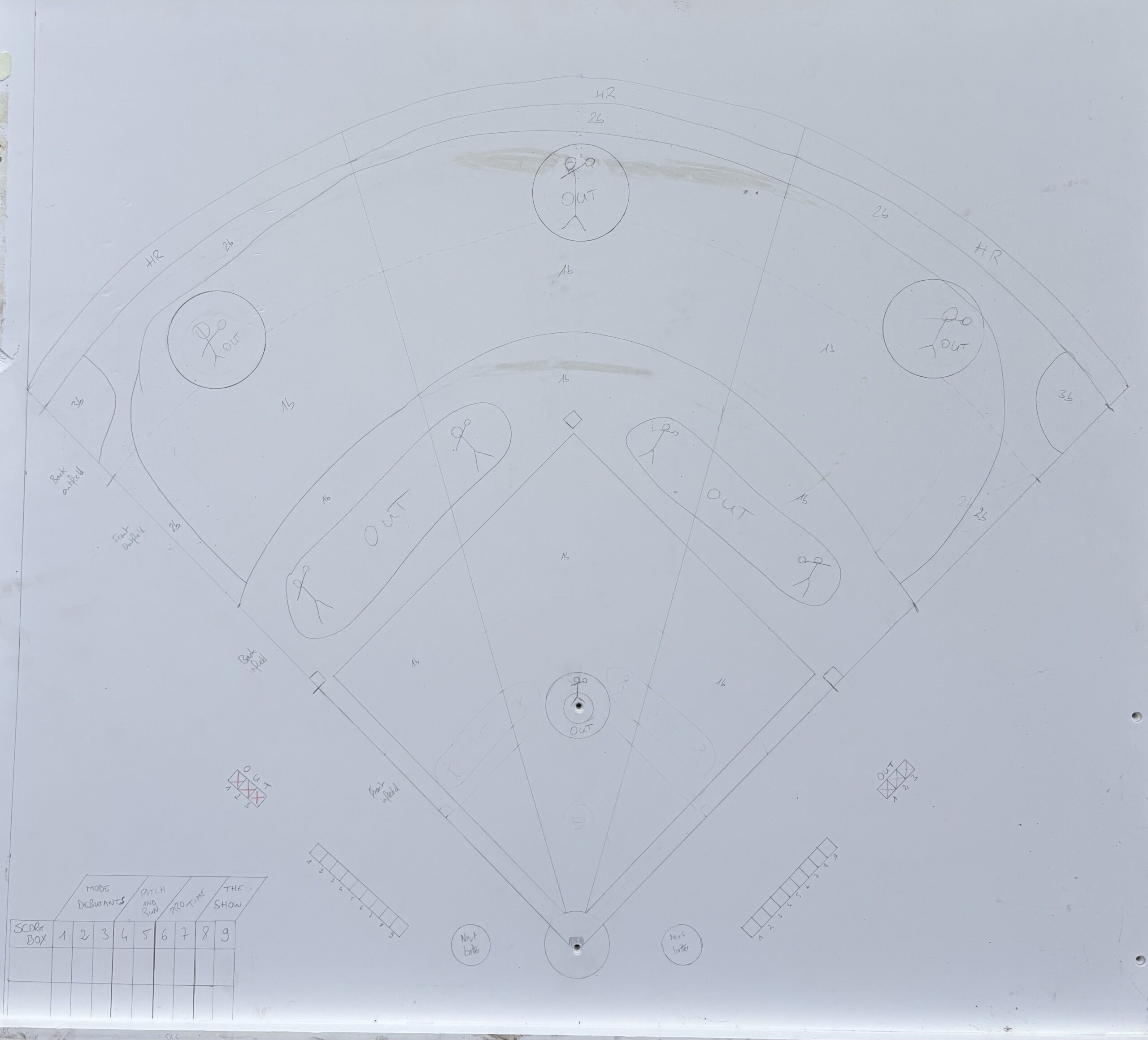
I quickly realized I had to get the game in front of as many people as possible. Wood is nice, but a pain to lug around, so on to version 3. I redrew the field on a laminated roll and, just like that, it became portable: when I head out, I grab my keys and my game and off to baseball practice, friends’ places, work, and game nights. Sometimes I’d forget my keys, but never my roll 😉 That way I could gather players’ feedback and gradually improve the rules; here, it didn’t need to be pretty — just good enough to validate the mechanics.
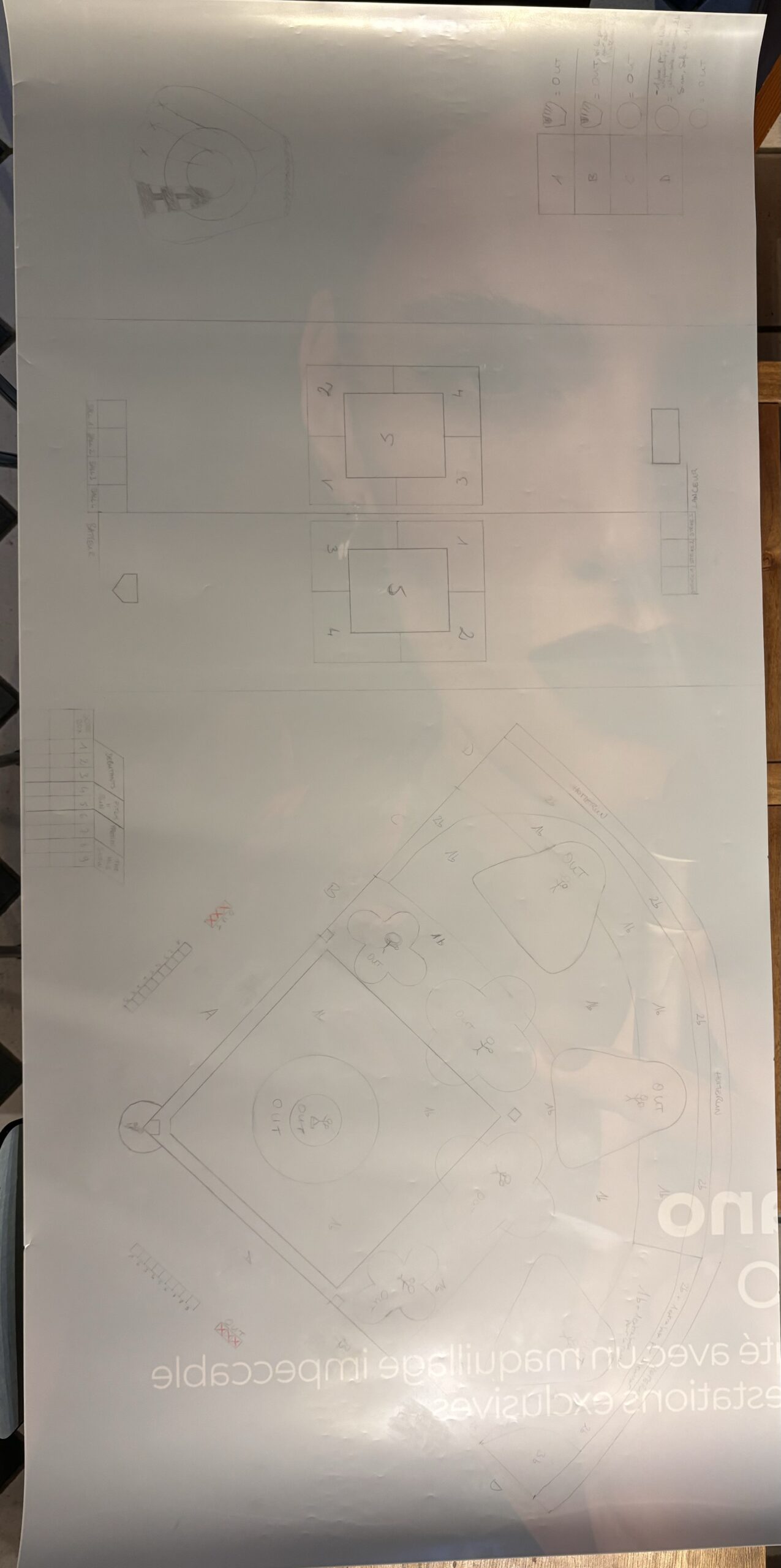
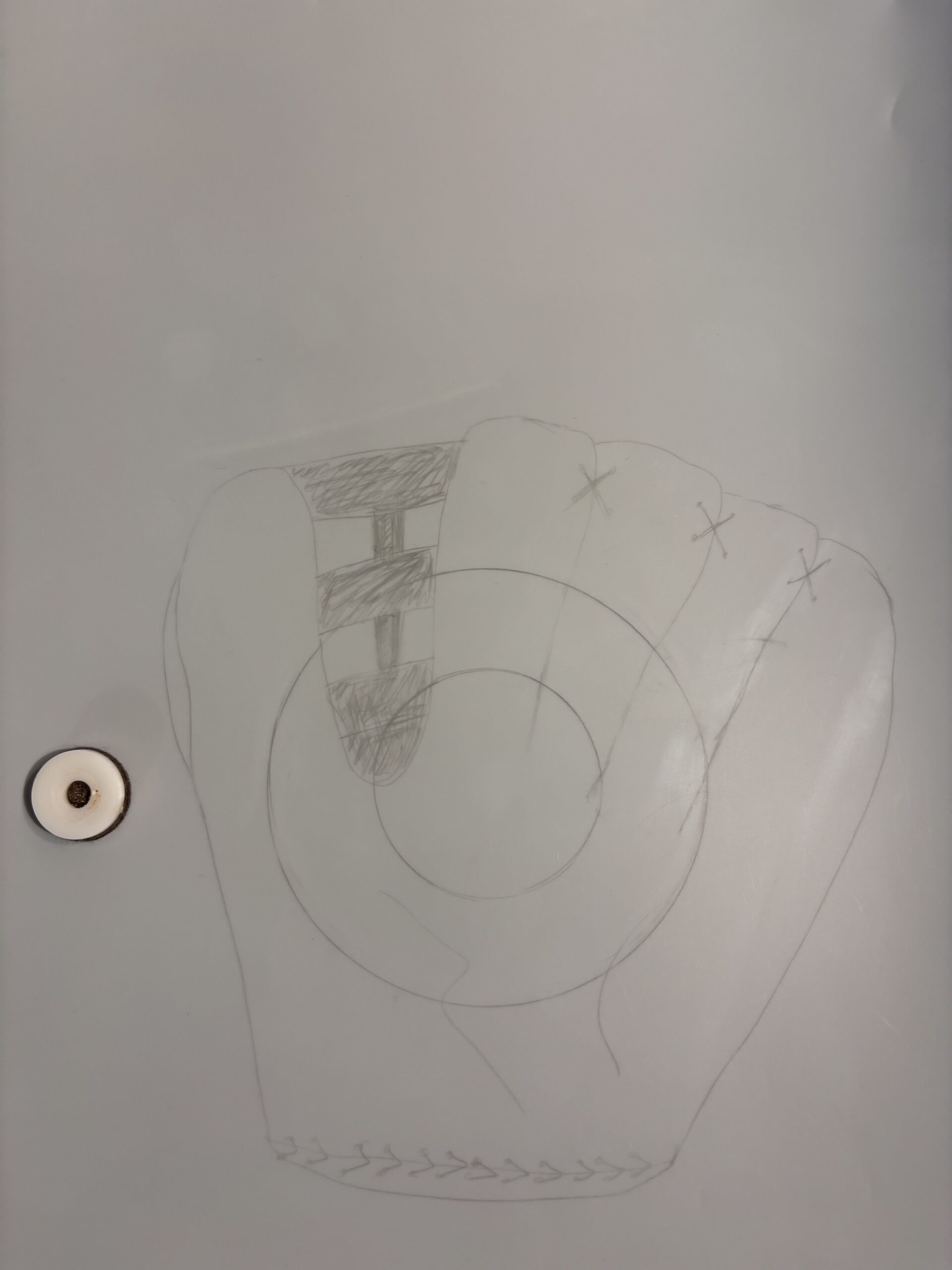
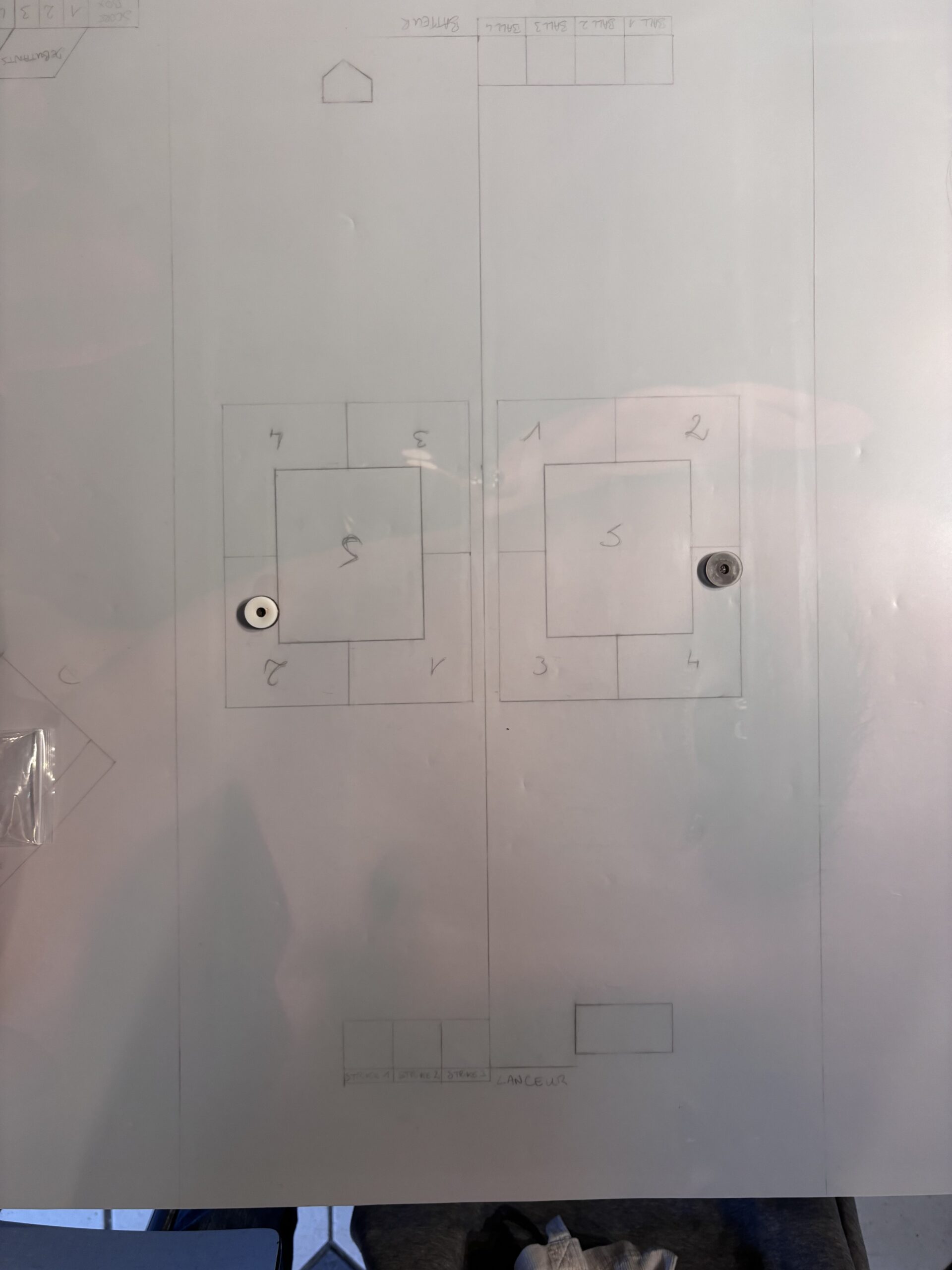
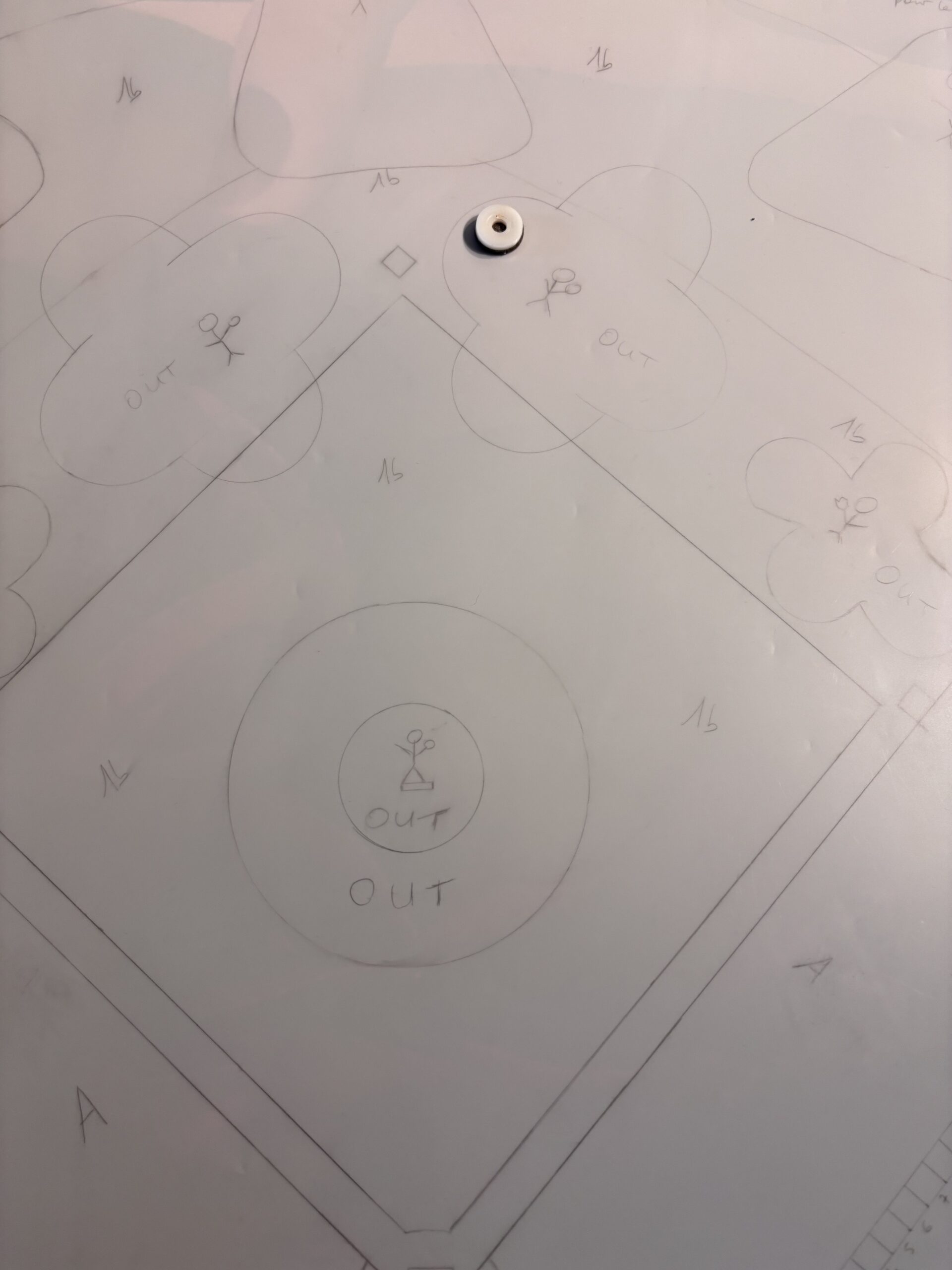
Version 3 — The laminated roll: portable anywhere. Click to enlarge.
Naturally, I wanted to recreate a lot of baseball’s elements, but the playtests quickly showed me you have to know when to simplify if you want the game to stay enjoyable and, above all, fun. To give one example: the “bunt” — does it really add anything to the game? Not really, so out it goes. I’d also thought about adding cards or dice; the upside was being able to reproduce and vary situations like in real baseball. But as intriguing as that looked on paper, I realized the heart of it was truly the flick. It instantly creates the action, brings the tension and the spectacular moments. And every time we tried to add some side element, we noticed a loss of rhythm and spontaneity.
The call was obvious: the cards and dice had to go, and I think that’s one of the best decisions we made during development.
This is also where the artwork begins. We needed something that evoked the world of baseball without shutting out people who don’t know it. So it had to be approachable and warm — and that’s where Clément showed the full range of his talent, with a welcoming look that avoided overly technical jargon and leaned into a dynamic, family-friendly vibe. In my opinion he absolutely nailed it, giving PITCH N’ RUN a lot of credibility.
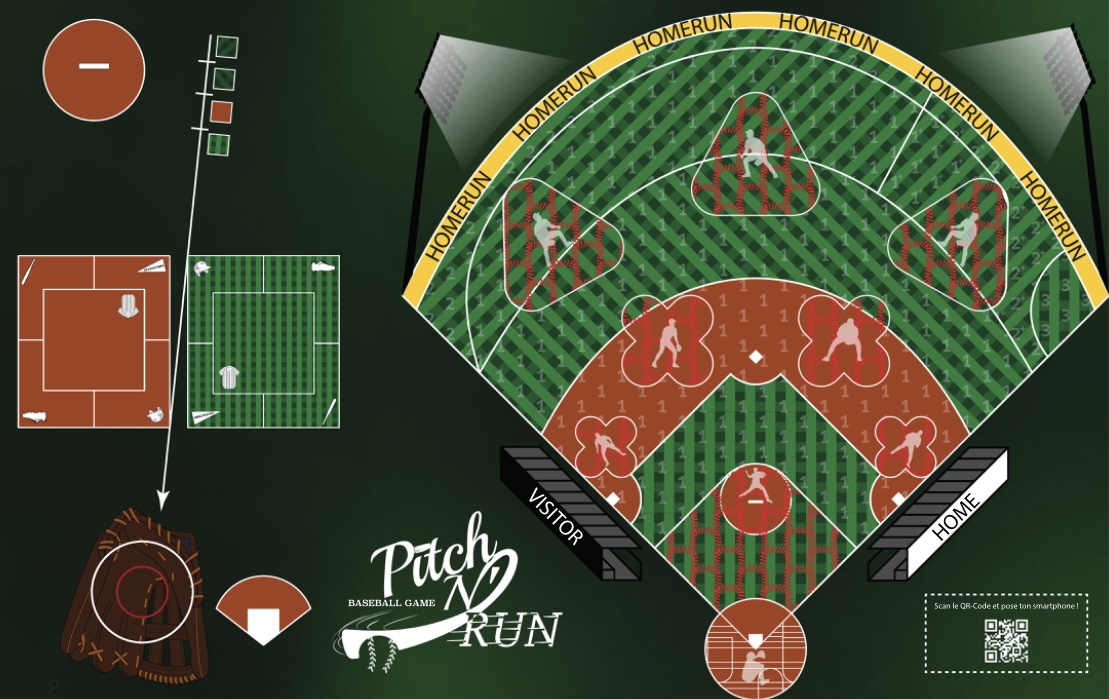
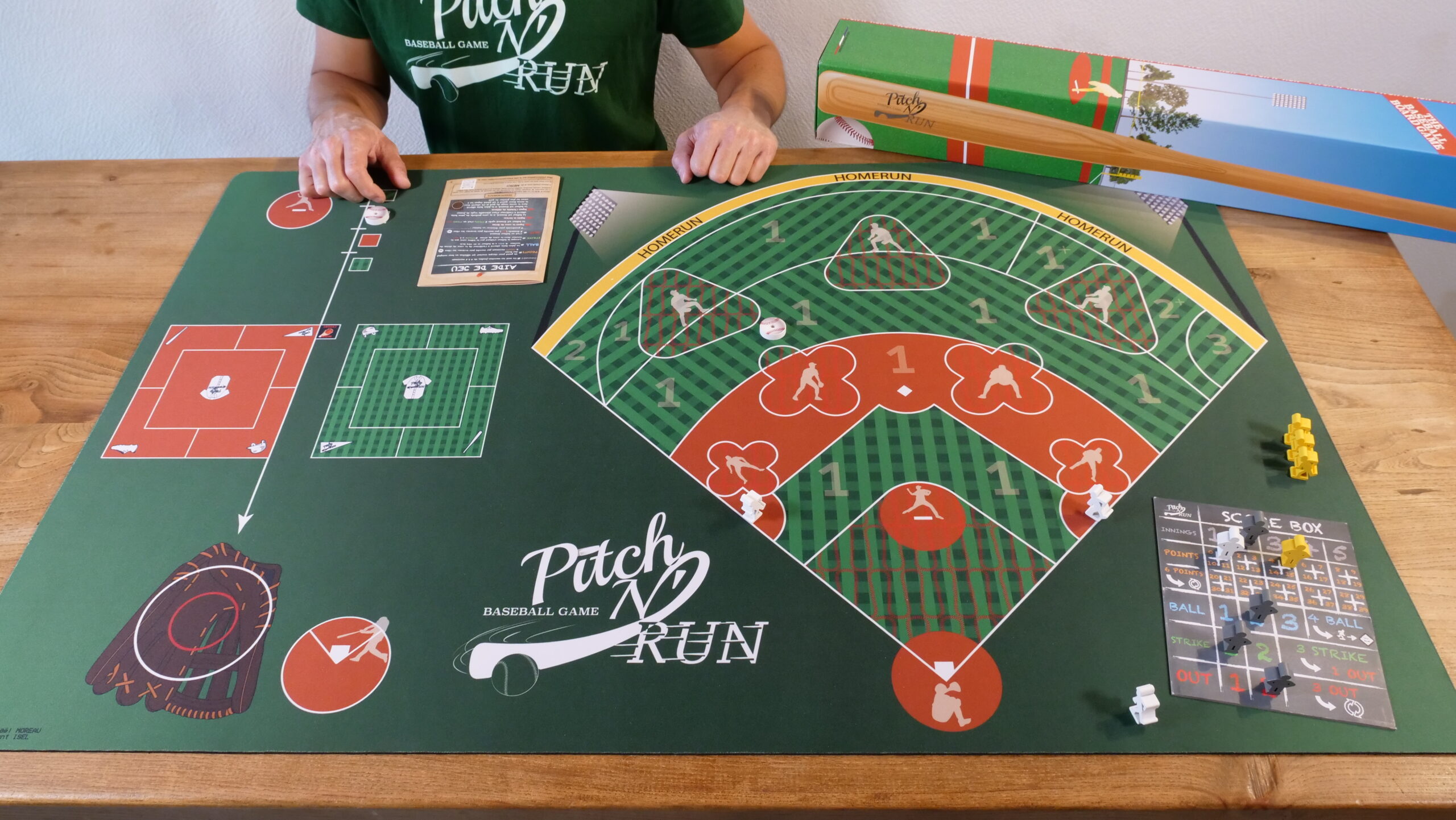
Next came the version printed on a big cardboard sheet. With it, I refined the dimensions and therefore the play experience. Two printed versions would follow: the first landed on April 4, 2024, with the Wow factor! We were starting to touch the game in its near-final form, on a neoprene mat. The second was the fruit of further tweaks — including an expert mode for the biggest baseball fans — a chance to polish the details and land on the Pitch N’ Run of today! It’s the game component I’m proudest of: the one that turns your table into a baseball field, the one that pulls you into the game you’re about to live! It catches the eye: people often lean in, intrigued, and are surprised by the quality, the size, and the level of detail of the field.
In the Bleachers — Meeting the Players
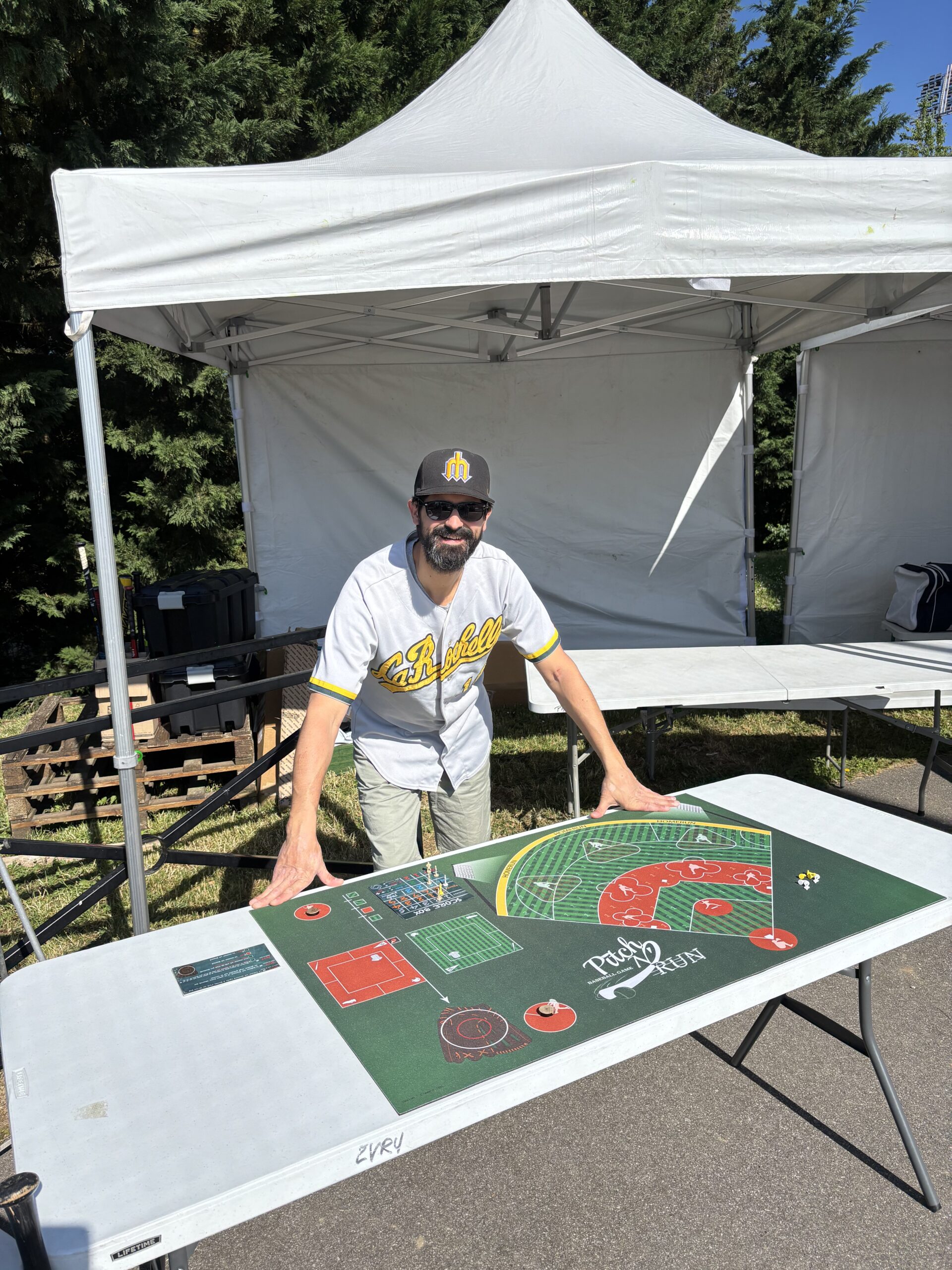
During those first playtests, one thing struck and moved me: players immediately got the goal and wanted to jump right in. Right away, an atmosphere builds around the game. You watch them feel the joy of a success, cheered on by everyone at the table; and conversely, when they miss, it’s drama, it’s frustration — all with plenty of humor. That’s when I understood I’d managed to convey the essence of the emotions you feel in this sport, and it happened naturally for them: I’d hit Goal #1!
You know, watching people who knew absolutely nothing about baseball start living the game through a board game — trash-talking, celebrating every run… it’s a thrill for a designer.
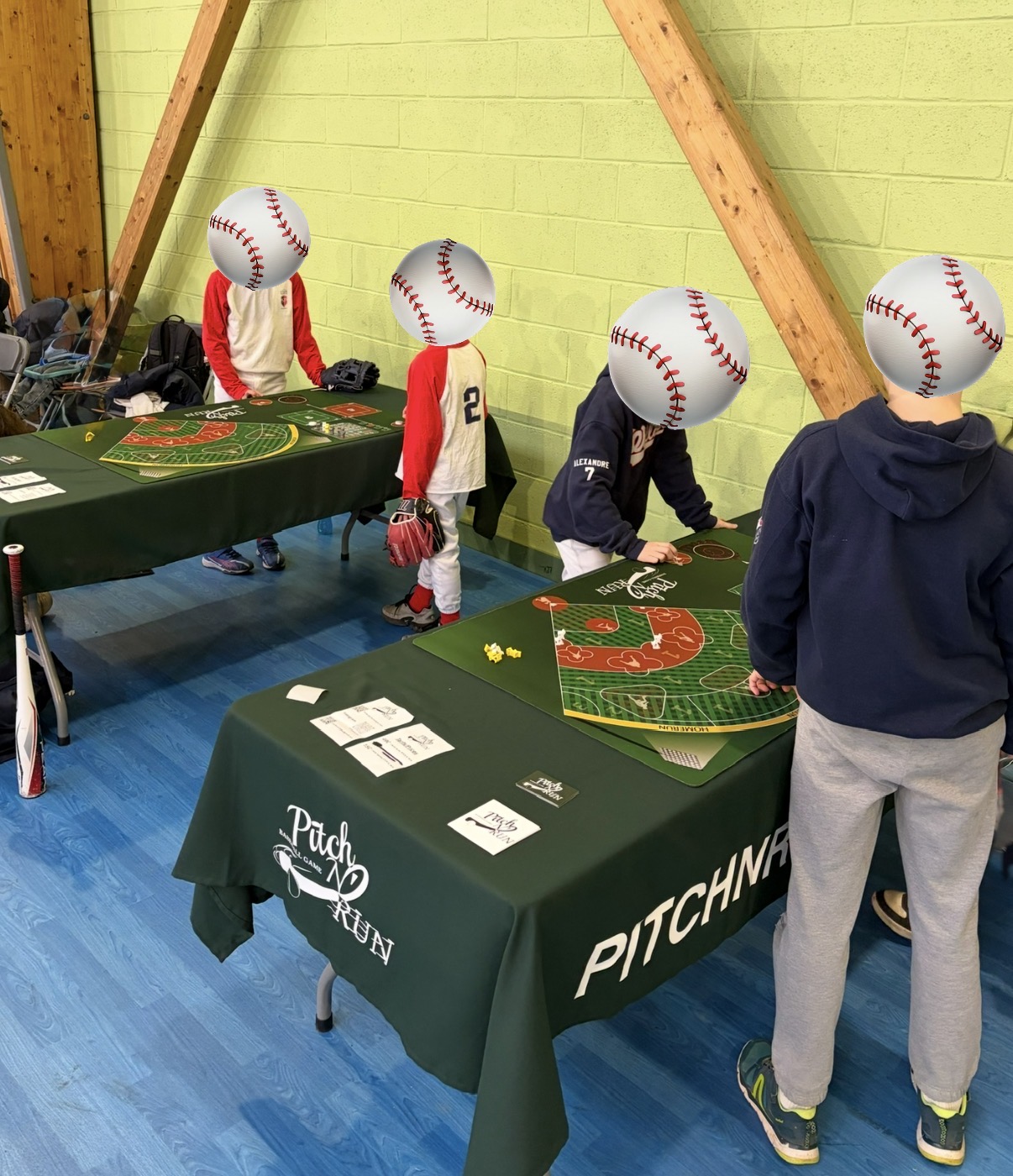
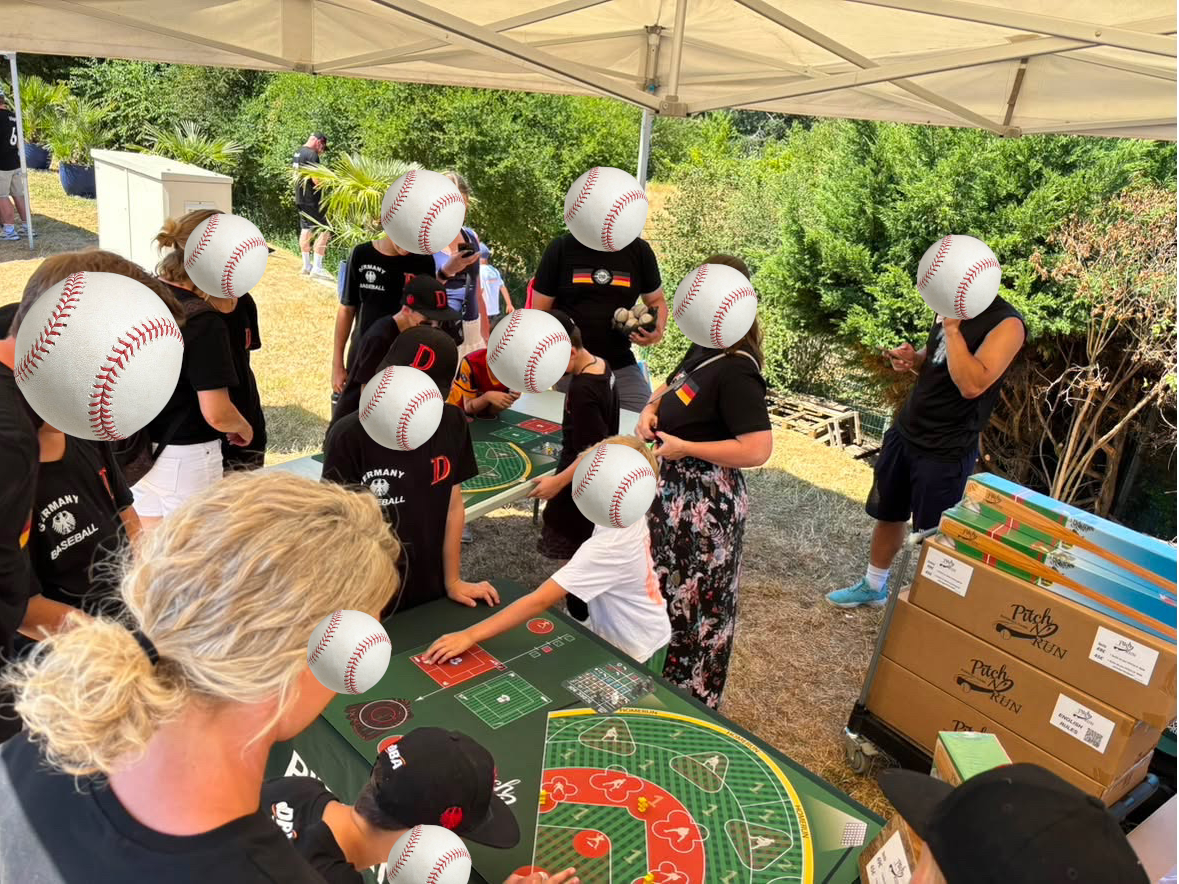
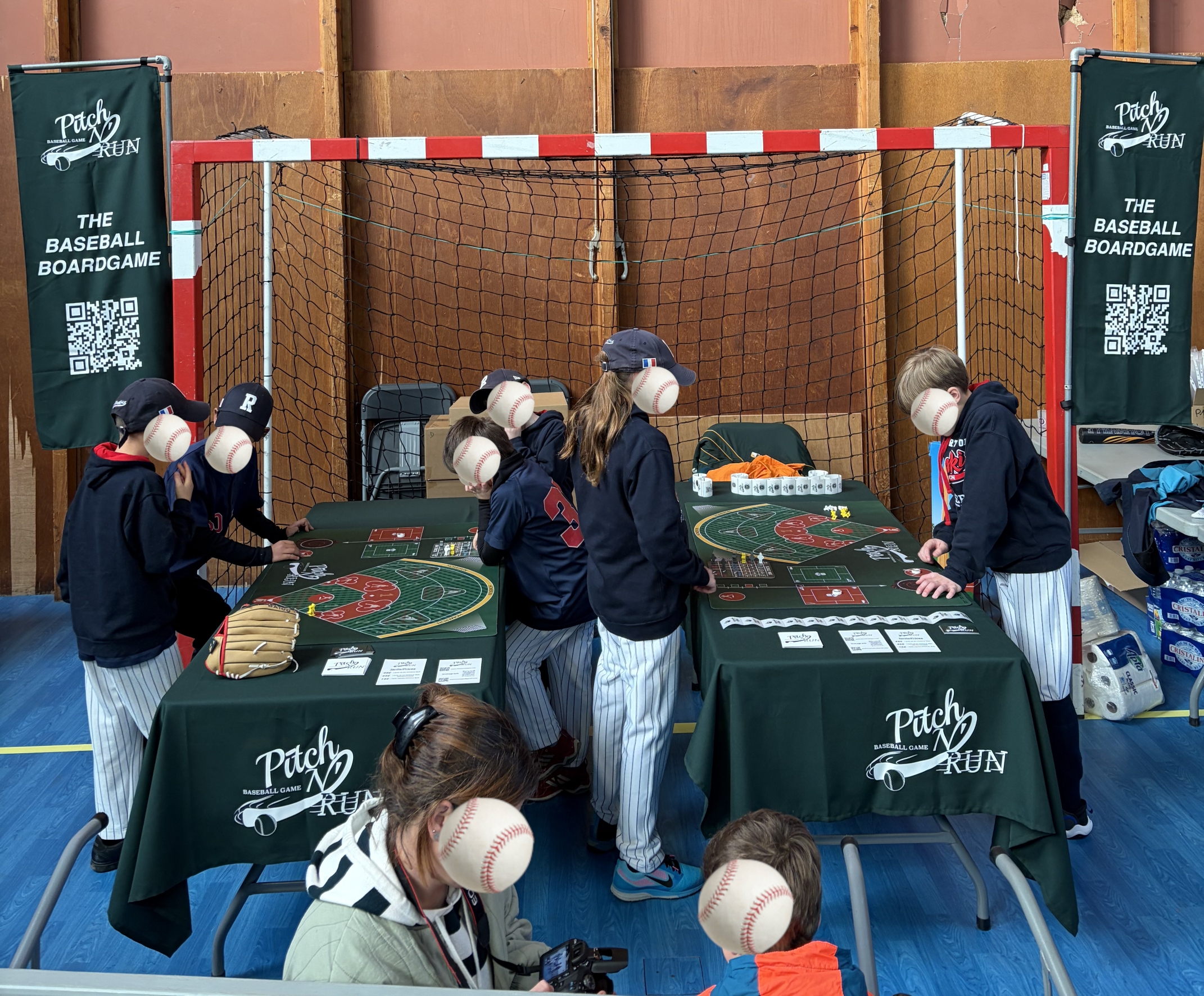

Click a photo to enlarge.
I also remember some parents of young baseball players coming back to tell me that, thanks to the game, they’d finally grasped certain plays or situations they’d been watching for years on the field without fully understanding. They told me that simplifying and depicting those plays through Pitch N’ Run turned out to be surprisingly educational. I remember that moment perfectly, because to me it’s one of the finest compliments you can pay the game. I wanted a game that entertains but also acts as a bridge to baseball — and we were right on the money.
Oh, and by the way — you know what took me the longest to make the game? Writing the rules. It had to be a game that plays smoothly for baseball buffs and total newcomers alike. So you weigh every word, explain it, and preserve the spirit of baseball. I spent a ton of time rephrasing, simplifying, organizing, explaining… and yet, in every game with beginners, new questions kept popping up and I had to keep reworking things to make the rules crystal-clear. It was a real challenge to write rules that let someone who doesn’t know baseball understand the game very quickly — and pick up a few baseball notions along the way.
Bottom of the Ninth — The Crowdfunding Campaign
The hardest part of this project was, without a doubt, the crowdfunding campaign on Ulule. I was walking into the board-game world as a complete unknown, and yet I had to convince everyone that I could pull it off and that the game was great.
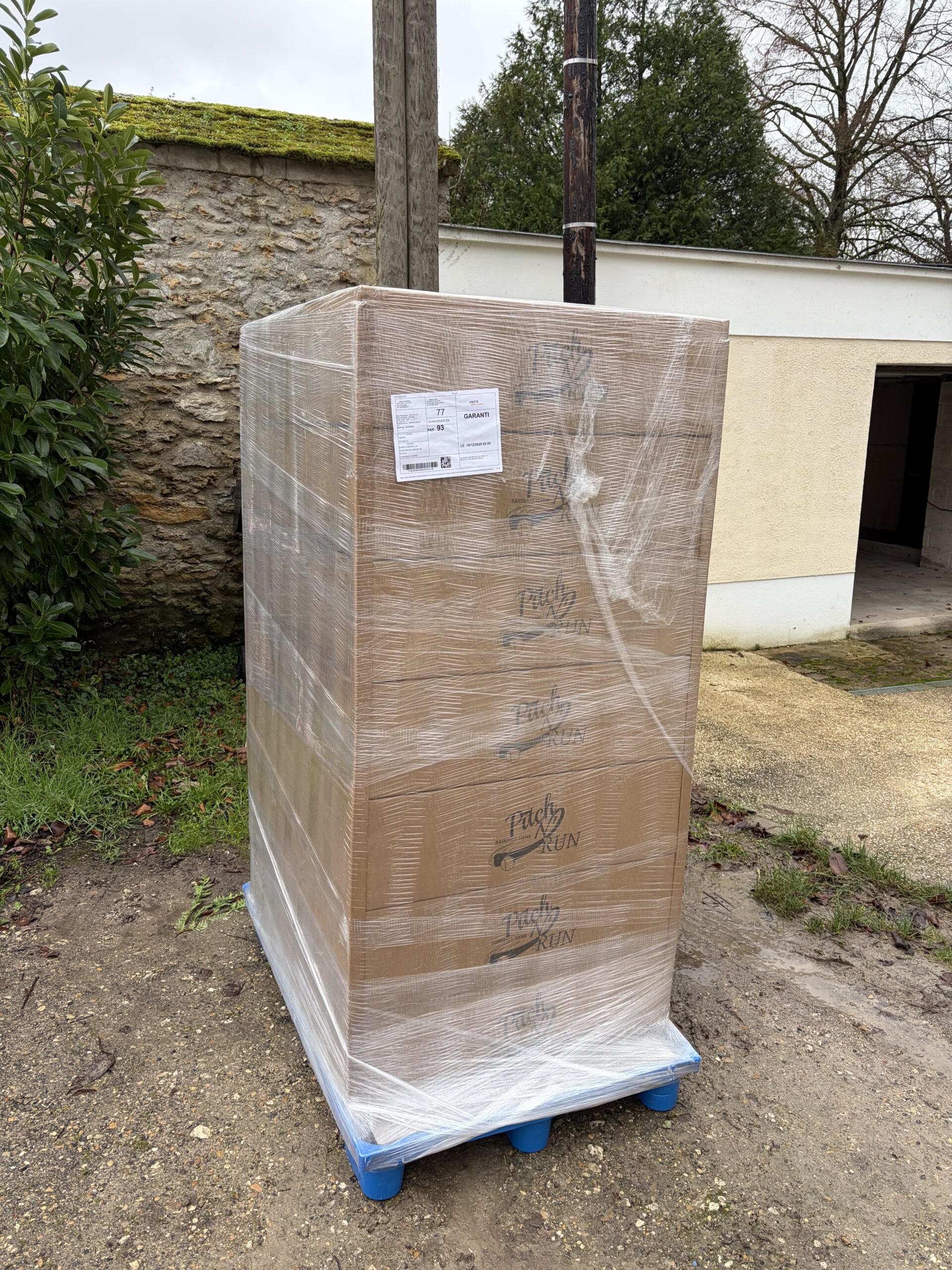
During the campaign, I was on edge: were we going to hit the goal? Would enough people believe in the project? It was such a relief when we reached it — pure joy, but also, right away, new questions and new goals. You have to launch production and anticipate deliveries as best you can; I discovered that some of those steps take a genuinely long time. You have to keep your backers informed, manage their impatience, and at the same time steer every aspect of production to make sure the game lives up to their expectations.
Through it all, I never once felt like giving up. It was stressful and exhausting, but the players’ enthusiasm at every demo, those little phrases dropped mid-game — “Ohhh!”, “Oh yeah!”, “That’s exactly like real baseball…” — carried me toward making this project a success.
In the end it’s an incredibly intense stretch, emotionally — probably the most intense: the doubts before funding, the excitement when it works, and then the pressure of deliveries. You swing from one emotion to the next very fast, like constant waves — whereas earlier, during development, it was gentler and time was easier to manage.
Rounding Home — Wrapping Up
To wrap up, I’d say self-publishing a game is hard, but it lets you master every stage of the project. I believed in my idea, the people around me lifted me up, and self-publishing also means more freedom in your design choices. It’s not a smooth ride — it’s a bit like a baseball game: it makes you feel things — and for me it was a solid two and a half years between the idea and the release. You make mistakes: I should have, for example, started talking about the project sooner and built up my network in the board-game world from the earliest stages. But that’s okay: making mistakes is the very nature of a first project…
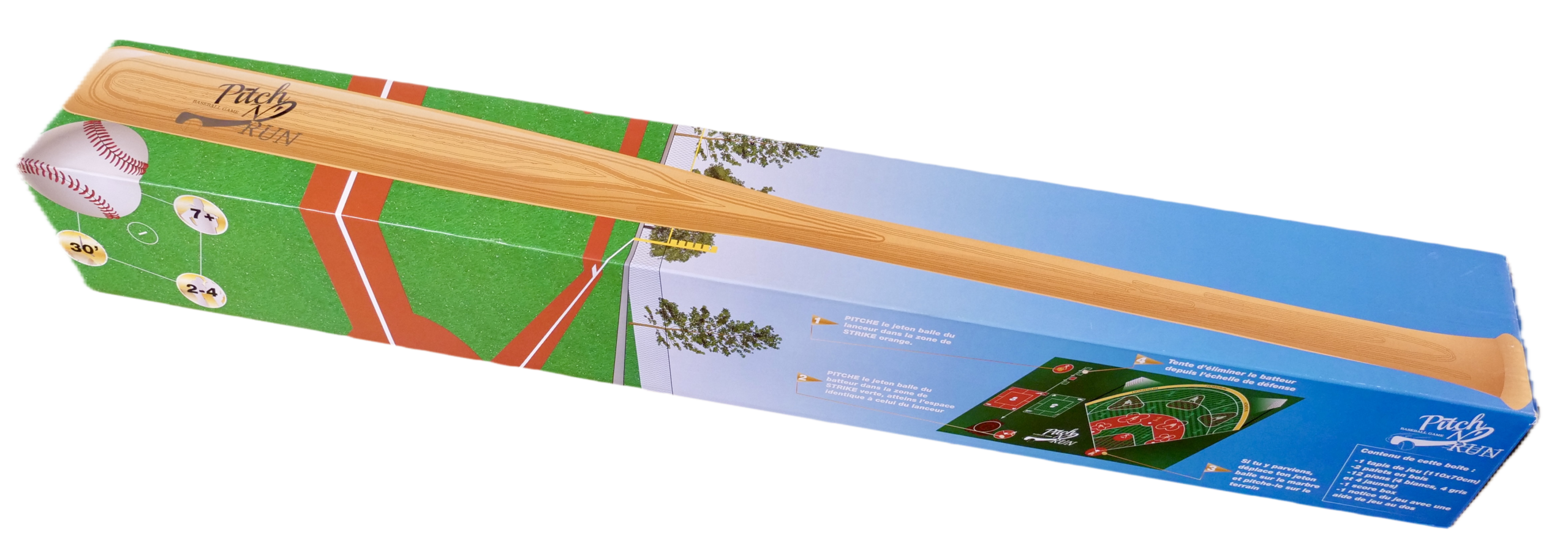
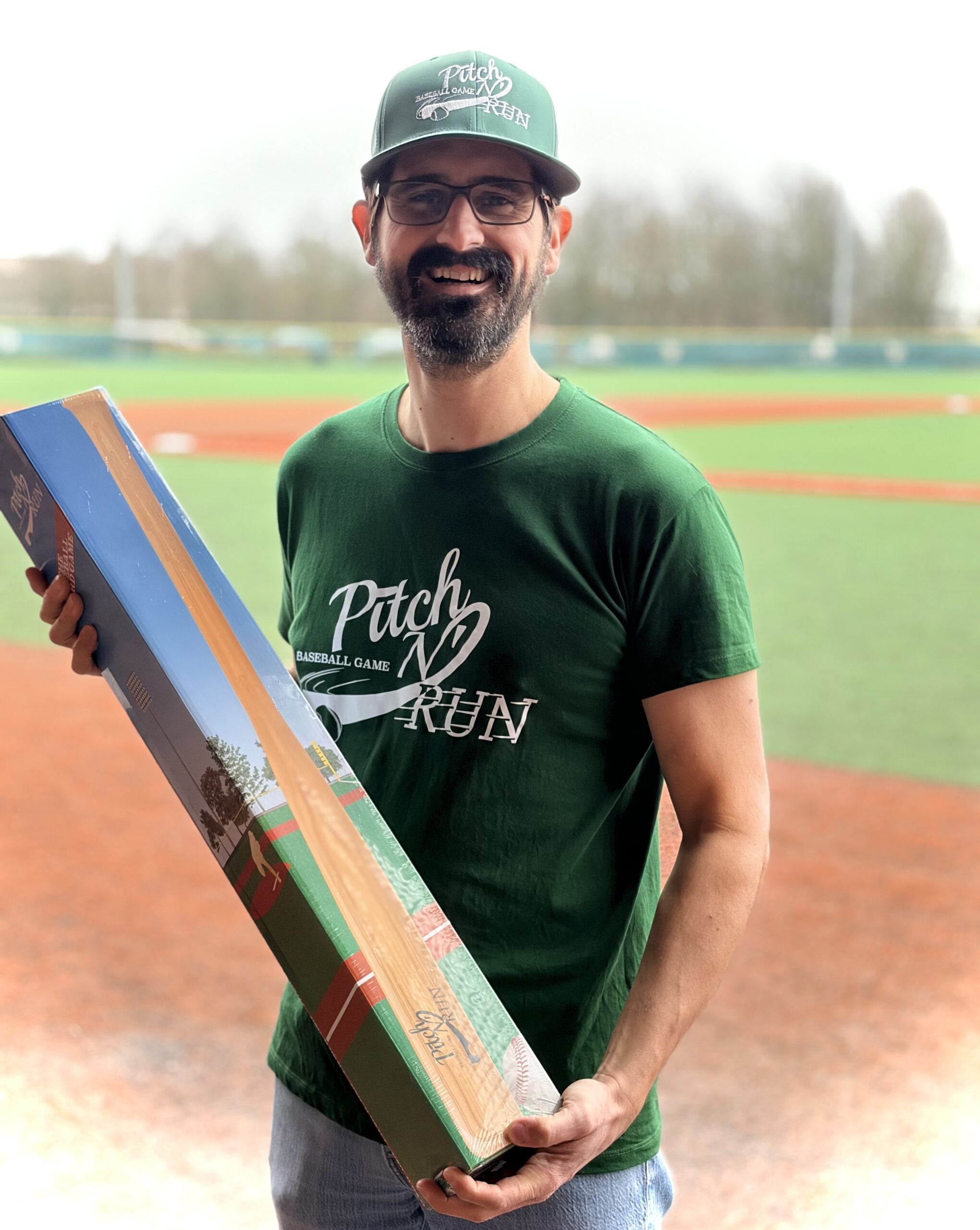
The first time I held the finished game in my hands, I was relieved, proud, and moved. I picked it up at my mom’s, who’d received it for me: an extra little touch of happiness. After so many years of work, watching the game become a real object is a very special moment. Today, when I spot strangers playing my game, it’s the finest reward of all: I see people laughing, facing off, and sharing a moment — thanks to a little idea that sprouted in my head back in 2023.
If you feel like making your own game too, do it! Don’t hold back, and get it playtested as early as you can: players’ eyes reveal what the designer can no longer see. Be willing to change — even cut — your ideas if it makes the game better!
🧢 If my game were a person…
it’d be someone competitive and welcoming, able to share their passion with anyone in just a few minutes.
“I don’t get anything about baseball — but now I actually want to watch a game!”
That’s the finest summary of this project’s goal — a simple comment I overheard at a gaming convention.
📸 Tu veux ne rater aucune autre histoire ?
Suis Ludolore sur Instagram📸 Don't want to miss another story?
Follow Ludolore on Instagram